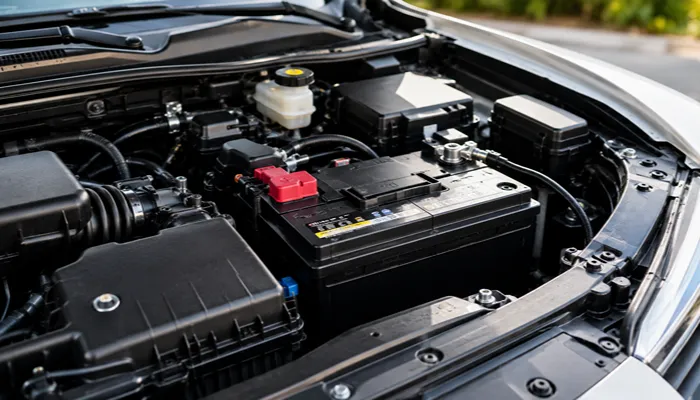
Want to know how to test car battery health at home? Good idea, because most people only think about their car battery once something has gone wrong. Maybe your car won’t start, it clicks when you turn the key, or the headlights look dim. Testing it could tell you whether the battery’s to blame.
You don’t have to be a mechanic. With basic tools and a few minutes, you can test a car battery at home, avoid unnecessary repairs, and find out when it needs charging or replacing.
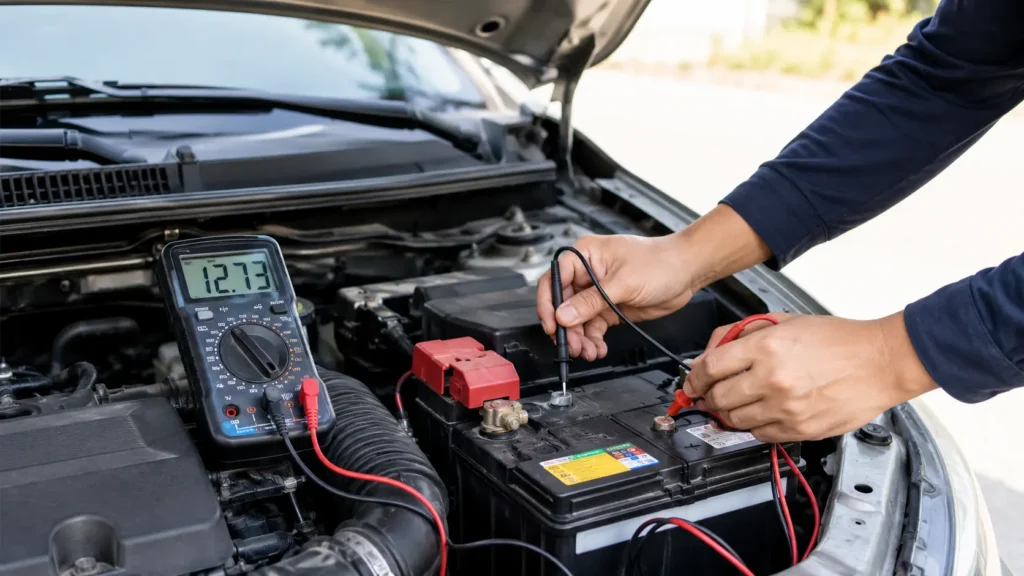
What Happens When a Car Battery Starts Failing?
A failing battery usually gives you small warnings before it dies, and many drivers ignore them until the car won’t start. Knowing the common bad battery signs can help you avoid being stuck on the road.
Common Warning Signs
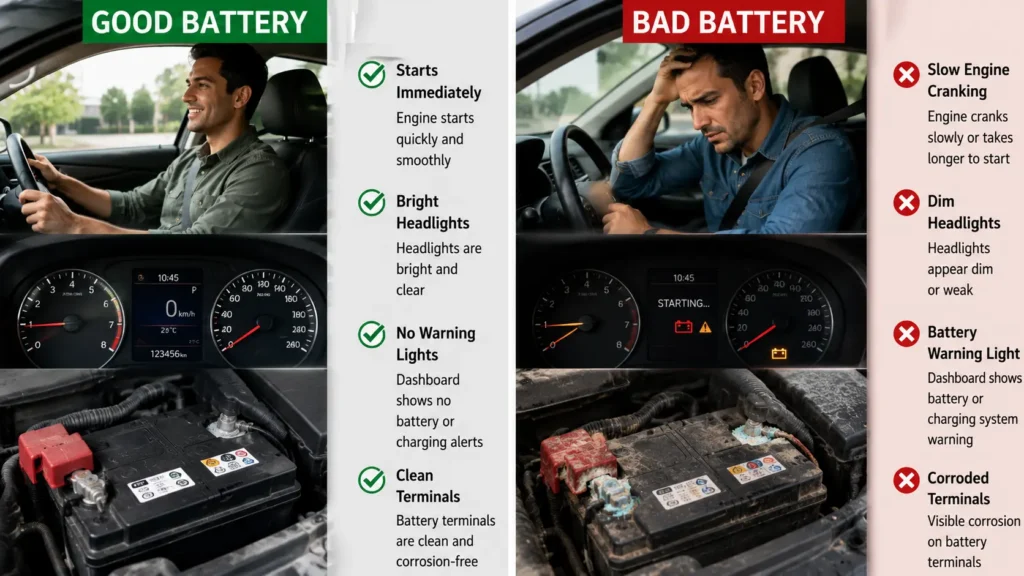
A slow crank is often the first thing you’ll notice. The engine may sound weak or take longer than normal to start. Flickering headlights or dim interior lights can also mean a weak battery. And sometimes, the dashboard battery light comes on, especially while you’re driving.
You might run into electrical problems as well:
- Power windows moving slowly
- Radio restarting randomly
- Weak AC performance
- Phone charger not working properly
Small problems like these often mean your battery’s losing power.
Why Ignoring Battery Problems Is Risky
You could break down at the worst possible time. A weak battery can also put extra stress on your electrical system and alternator. You don’t want to find out it’s dead in a parking lot, or on the side of the road.
Tools Needed to Test a Car Battery
Get these together first. The right tools make the job safer, faster, and more accurate, and most of them are cheap and easy to find.
Essential Tools
Here’s what you’ll need:
- Digital multimeter
- Safety gloves
- Safety glasses
A digital multimeter measures the battery’s voltage, so you can see whether it’s healthy or weak. Gloves and glasses protect your hands and eyes from acid, sparks, and dirt.
Optional Tools
A few extras can help too:
- Battery tester
- Battery charger
A battery tester gives you more detail about the battery’s health, and a charger can recharge a weak battery so you can test it again.
Safety Tips Before Testing
Always turn off the engine first. Don’t touch metal terminals with bare hands or tools, since you could cause a spark. And work somewhere well-ventilated, because batteries can release harmful gases.
How to Test Car Battery With a Multimeter
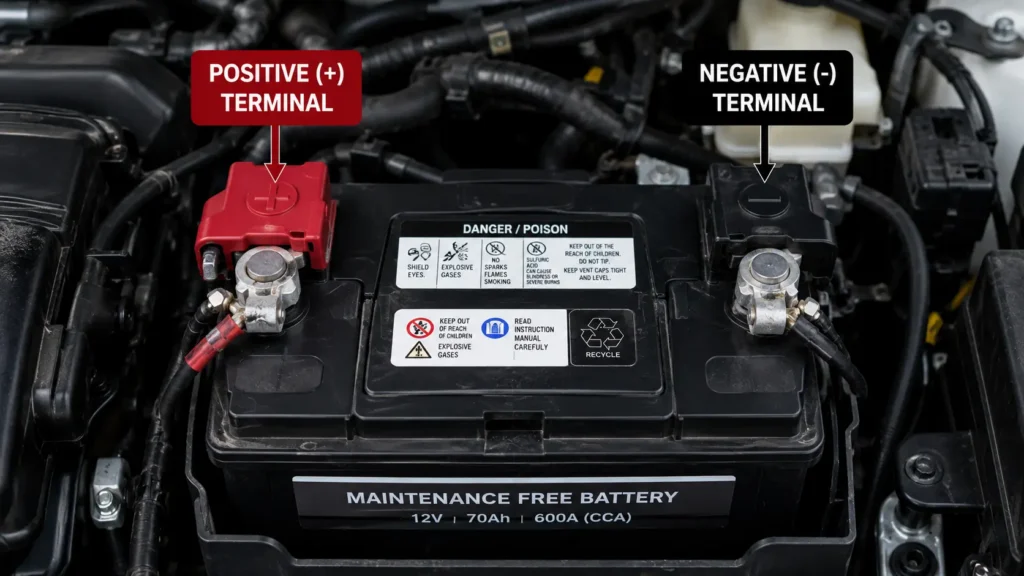
This is one of the easiest ways to see how your battery’s doing. All it takes is a simple digital multimeter and a few minutes.
Step 1 — Turn Off the Car
Make sure the engine’s completely off, and remove the key. If you’ve just been driving, wait at least 30 minutes so the voltage can settle and you get a more accurate reading.
Test too soon after a drive, and the reading may look a little high, because the alternator was just charging the battery.
Step 2 — Locate Battery Terminals
Open the hood and find the battery. You’ll see two terminals:
- Positive terminal (+): usually marked with a red cover or plus sign
- Negative terminal (-): usually black and connected to the car body
Make sure they’re clean and free of heavy corrosion.
Step 3 — Connect the Multimeter Correctly
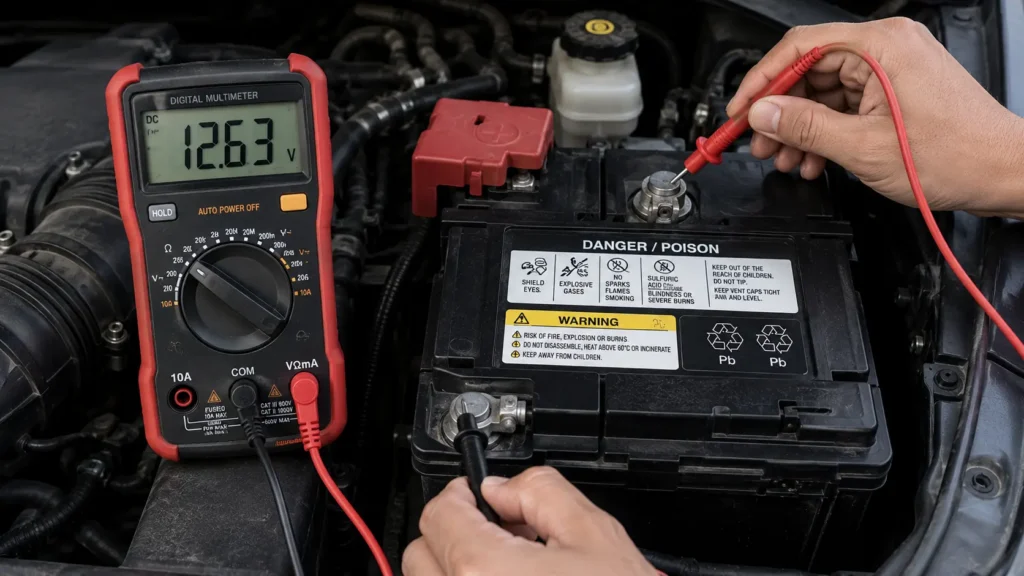
Set your multimeter to DC voltage, usually marked “20V DC.”
Then connect the probes carefully:
- Red probe to the positive terminal (+)
- Black probe to the negative terminal (-)
Make sure they’re touching the metal terminals properly, so you get a stable reading.
Step 4 — Read the Voltage
Now check the number on the multimeter screen.
A healthy, fully charged battery should read about 12.6 volts.
Here’s what your reading usually means:
- 12.6V = healthy battery
- 12.4V = acceptable condition
- 12.2V = weak battery
- Below 12V = failing battery
If it’s low, your battery may need charging or replacing soon.
Step 5 — Start the Engine and Test Again
Start the engine with the multimeter still connected. The voltage should go up, usually to between 13.7V and 14.7V.
That means the alternator’s charging the battery correctly. If it doesn’t rise, you may have a charging system problem.
What the Results Mean
So what should you do next?
- Recharge the battery if the voltage is a little low
- Replace it if it stays below 12V, even after charging
- Check the alternator if the voltage doesn’t rise with the engine running
Test regularly, and you’re less likely to be caught out by a breakdown.
Car Battery Voltage Chart Explained
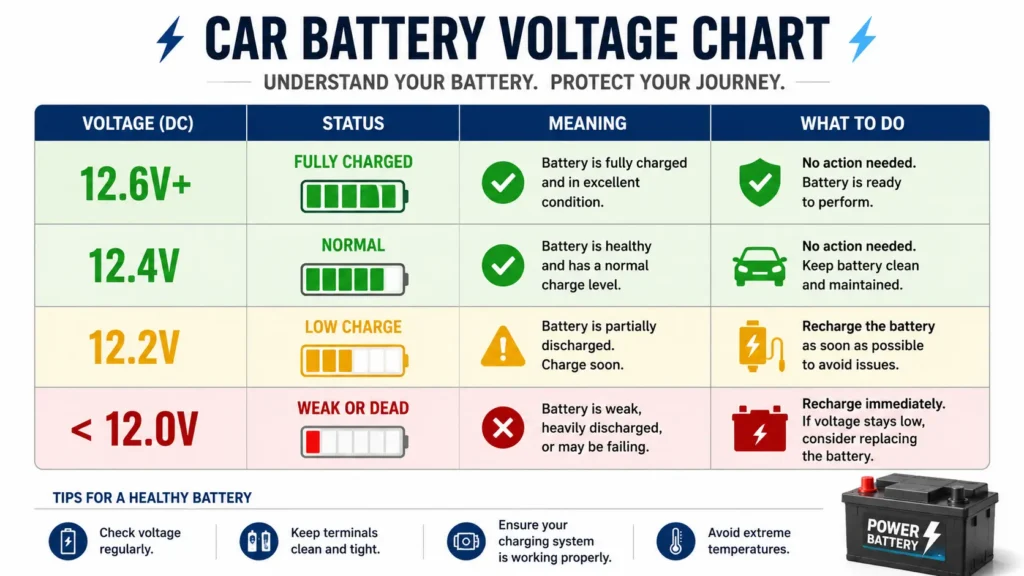
Voltage is one of the easiest ways to judge battery health. A fully charged battery usually shows around 12.6V or higher with the engine off. If it drops too low, your car may struggle to start, especially in cold weather.
| Battery Voltage | Battery Condition |
|---|---|
| 12.6V or higher | Excellent |
| 12.4V | Good |
| 12.2V | Weak |
| Below 12V | Replace Soon |
Why Voltage Matters
Voltage tells you how much power your battery can deliver. A healthy one has enough to start the engine and run things like your lights, music, and sensors. Too low, and it could fail without warning. Your car might start fine today, but weak voltage can be an early warning.
Best Time to Test Battery
Try early in the morning, before you start the engine. The battery’s been sitting for hours, so you’ll get the most accurate reading. Right after a drive, the voltage may be temporarily higher, which can hide problems.
How to Test Car Battery Without a Multimeter
No multimeter? You can still test a car battery with some simple checks. They aren’t 100% accurate, but they’re useful before you visit a mechanic.
Headlight Brightness Test
Turn on your headlights before you start the engine. Bright, steady lights are a good sign. Dim or weak ones often mean the charge is low.
Watch them when you start the car too. If they get a lot dimmer, your battery’s probably struggling.
Engine Cranking Sound
Listen when you start the car. A healthy battery should give you a strong, quick crank. If it’s slow or weak, the battery may not have enough charge.
Clicking or a delayed start can also be warning signs.
Electrical Component Test
Try the radio, power windows, or cabin lights. If they seem slower or weaker than normal, your battery could be losing power.
When These Methods Are Not Enough
These checks can give you a rough idea, but they can’t show you the exact voltage. For accurate results, you’ll need a multimeter or professional battery tester.
Common Mistakes People Make While Testing a Car Battery
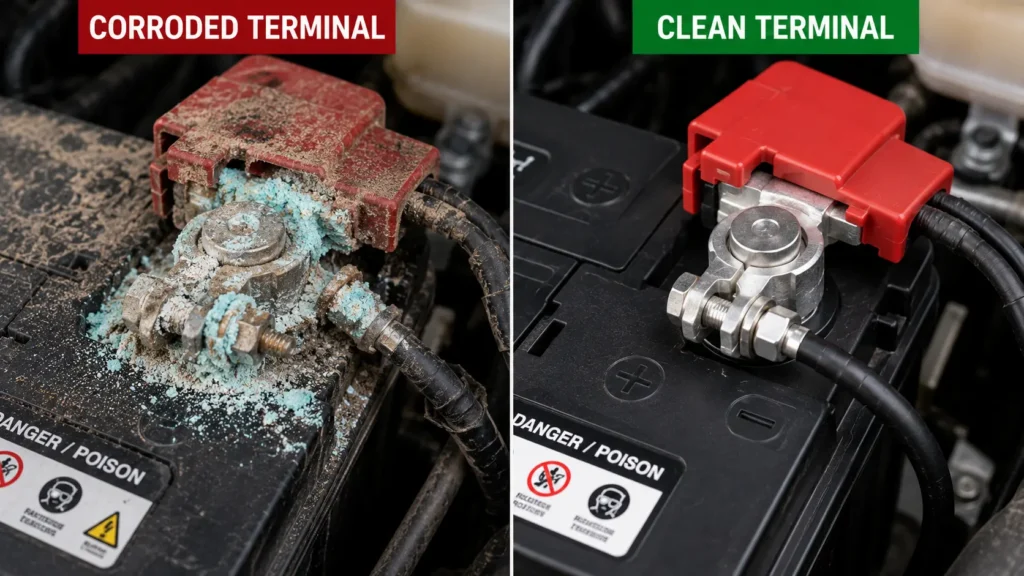
Small mistakes can make a healthy battery look bad, or hide a real problem. Try to avoid these:
Testing Right After Driving
- A battery can show a higher voltage right after a drive because it still has a surface charge.
- Wait at least 30 minutes after turning off the engine.
Connecting Probes Incorrectly
- Red goes on the positive terminal, and black goes on the negative.
- Mix them up, and you could get a wrong reading or damage the multimeter.
Ignoring Corroded Terminals
- Dirty or corroded terminals can block proper contact.
- Clean them first to get an accurate result.
Using Cheap Faulty Multimeters
- A low-quality or damaged multimeter may show the wrong voltage.
- Use a reliable digital one for better accuracy.
When Should You Replace a Car Battery?
No battery lasts forever. If yours is showing several problems, it may be time for a new one instead of recharging it again and again.
Battery Age
Most last around 3 to 5 years, depending on weather, driving habits, and maintenance. If yours is older than that, have it tested regularly, even if the car still starts normally.
Frequent Jump Starts
An occasional jump start is one thing. If you need them often, your battery’s probably wearing out.
Low Voltage Even After Charging
A healthy battery should hold a stable charge. If the voltage drops quickly after charging, the cells may be damaged.
Swollen or Damaged Battery
Check the case for swelling, cracks, leaks, or corrosion. Extreme heat can make a battery expand, and that’s a strong sign you should replace it immediately.
Here’s a simple rule: if your battery’s old and showing two or more of these signs, replace it. It’s better than risking a breakdown.
Tips to Make Your Car Battery Last Longer
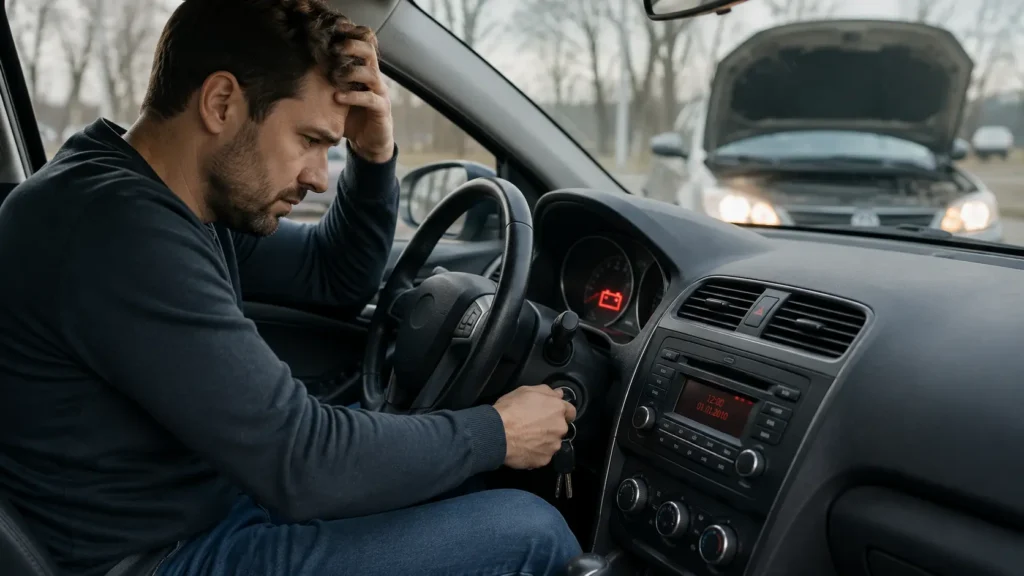
A few simple habits can make a big difference, and save you money on replacements.
Keep Terminals Clean
- Check them regularly for dirt or white corrosion.
- Clean them gently with a battery brush or a mix of baking soda and water.
- Keep the connections tight so the battery can charge properly.
Avoid Leaving Lights On
- Turn off your headlights, cabin lights, and other electronics before you leave the car.
- Leaving lights on overnight can quickly drain the battery.
Drive Regularly
- Short trips may not fully recharge the battery.
- Regular driving helps keep the battery charged and healthy.
Protect Battery From Extreme Heat
- High temperatures can weaken a battery over time.
- Park in the shade or a garage when you can.
FAQs
Can a car battery test good but still fail?
Yes. It may show normal voltage in a quick test, but still fail under heavy load or while starting the car. Old batteries can work fine one day and stop the next, especially in very hot or cold weather.
Is 12.2 volts a bad battery?
It’s usually partially discharged, not completely bad, but it may need charging soon. A healthy, fully charged battery reads around 12.6 volts.
How often should I test my car battery?
Every 3 to 6 months is a good idea. Test it before long trips too, and in winter and summer, when batteries are under more stress.
Can I test a car battery at home safely?
Yes, with a multimeter or battery tester. Just make sure the car’s off, wear gloves if you can, and connect the tester correctly to avoid sparks or damage.
Conclusion
Now you know how to test car battery health yourself. Check the voltage, look at the terminals, and watch for warning signs, and you should have a good idea of its condition before it fails.
Even a quick test every few months can make a big difference. It could save you from a breakdown, an expensive tow, and the stress of a car that won’t start.