Car maintenance sounds like a chore, but it mostly comes down to small, regular checks of things like your oil, tires, brakes, and battery. Skip them and small problems can quickly become expensive ones. Ask anyone who’s ignored a warning light for six months.
Good car care keeps you safer and helps your car last longer. It can also improve fuel efficiency and save you from major breakdowns and emergency repair bills.
Don’t know much about cars? That’s fine. Everything here is simple and practical.
What Is Car Maintenance and Why Is It Important?
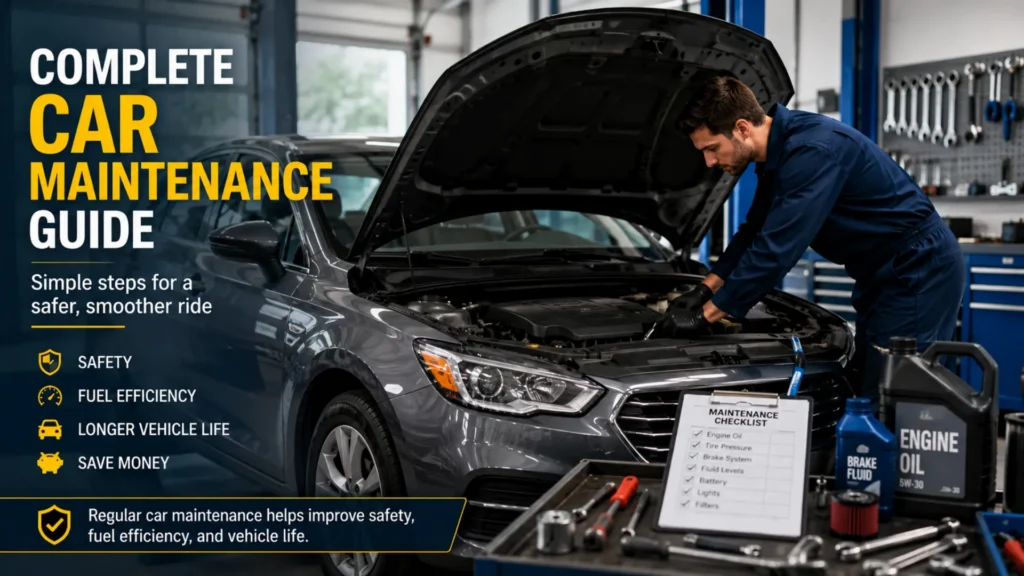
It’s the process of regularly checking and servicing your car to keep it safe, efficient, and reliable. A few simple jobs can help you avoid expensive repairs and keep things running smoothly.
What Does Car Maintenance Include?
It covers a range of checks and services that protect your car from damage and sudden breakdowns, including:
- Oil changes to keep the engine properly lubricated
- Tire checks for correct air pressure and tire condition
- Brake inspections to ensure safe stopping performance
- Battery care to avoid starting problems
- Fluid checks for coolant, transmission fluid, brake fluid, and windshield washer fluid
They may seem minor, but these checks do a lot to keep your car dependable.
Benefits of Regular Car Maintenance
There’s a lot in it for you and your wallet. A well-maintained car usually gets better fuel efficiency, and you’re less likely to face unexpected breakdowns or costly emergency repairs.
It can also help your resale value, since buyers like a good service history. And it helps extend engine life, while making sure important systems like brakes and tires work properly.
All in all, it’s one of the easiest ways to save money and make your driving safer.
Essential Car Maintenance Checklist for Beginners
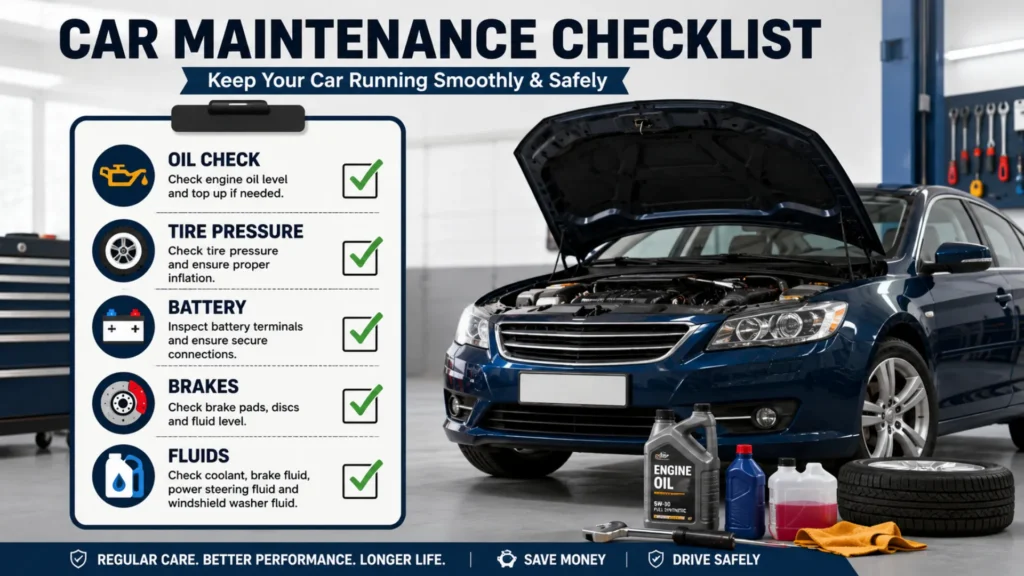
It doesn’t have to be complicated. Most basic checks only take a few minutes. Here’s an easy checklist, broken down by week, month, and year.
Weekly Car Maintenance Tasks
These quick checks can catch small problems before they get expensive.
| Task | What to Check | Why It Matters |
|---|---|---|
| Tire Pressure | Use a tire pressure gauge to check all four tires | Proper pressure improves fuel efficiency and safety |
| Car Lights | Test headlights, brake lights, and turn signals | Working lights help you stay visible on the road |
| Windshield Washer Fluid | Refill washer fluid if it is low | Keeps your windshield clean for better visibility |
All of this can take less than 10 minutes, and it can prevent a lot of common problems.
Monthly Car Maintenance Tasks
Once a month, take a closer look to help prevent breakdowns.
| Task | What to Check | Why It Matters |
|---|---|---|
| Battery Inspection | Look for corrosion or loose battery connections | Helps avoid starting problems |
| Oil Level Check | Use the dipstick to check engine oil level | Low oil can damage the engine |
| Coolant Level | Make sure coolant is between minimum and maximum marks | Prevents overheating |
| Wiper Condition | Check for cracks or streaks on wiper blades | Improves visibility during rain |
Notice anything unusual? Fix it early, before you’re facing a bigger bill.
Yearly Maintenance Tasks
Do these once a year, or according to your car’s service schedule.
| Task | Purpose |
|---|---|
| Brake Service | Ensures safe braking performance |
| Tire Rotation | Helps tires wear evenly and last longer |
| Air Filter Replacement | Improves engine performance and airflow |
| Full Vehicle Inspection | Detects hidden mechanical problems early |
Yearly servicing can also help your resale value and keep your car running efficiently.
To make it easier, keep a checklist on your phone or print one for the garage. It’ll help you remember important dates.
Engine Oil Maintenance: The Most Important Part of Car Care
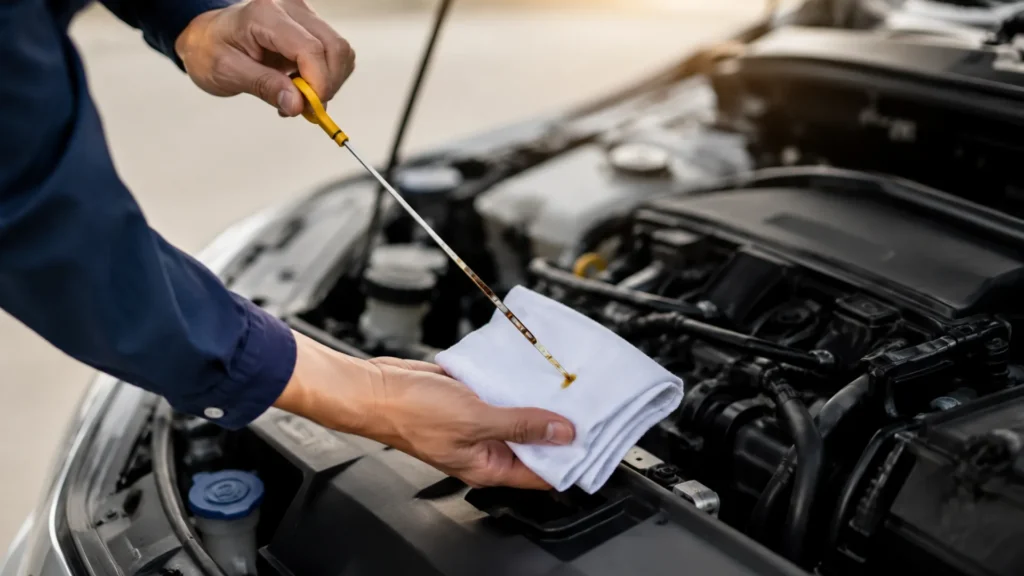
Keeping up with your oil is one of the easiest ways to keep your car running smoothly for years. Without clean oil, engine parts can wear out faster, overheat, and even suffer serious damage. It can help your fuel efficiency too.
Why Engine Oil Matters
Oil does several jobs. It lubricates moving parts so they don’t grind against each other, which cuts friction and keeps the engine running smoothly.
It also helps cool things down, since an engine creates a lot of heat. And clean oil protects against the dirt, sludge, and metal particles that can build up over time.
That’s why oil changes are such a key part of servicing. They help your engine last and keep repair costs down.
Signs Your Car Needs an Oil Change
Your car will usually drop some hints. Dark or dirty oil is a common one. Fresh oil tends to look amber, while old oil turns thick and black.
You might also hear unusual engine noise or knocking if the oil isn’t lubricating properly. The dashboard oil warning light is an even clearer sign.
Ignore these, and you could end up with poor performance and long-term damage. Book an oil change as soon as you can.
How Often Should You Change Engine Oil?
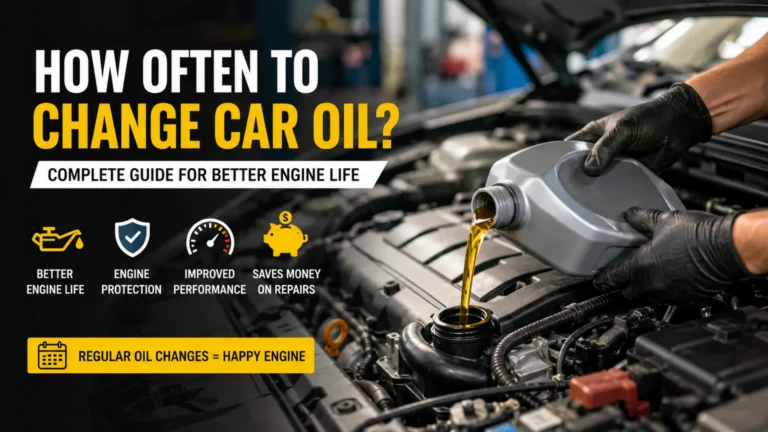
With normal driving, most cars need a change every 5,000 to 10,000 kilometers, depending on the vehicle and oil type.
You may need to do it more often if you deal with:
- Driving in heavy traffic
- Frequent short trips
- Hot weather conditions
- Carrying heavy loads
Check your owner’s manual for the recommended schedule.
For more detail, see our guide on how often to change car oil.
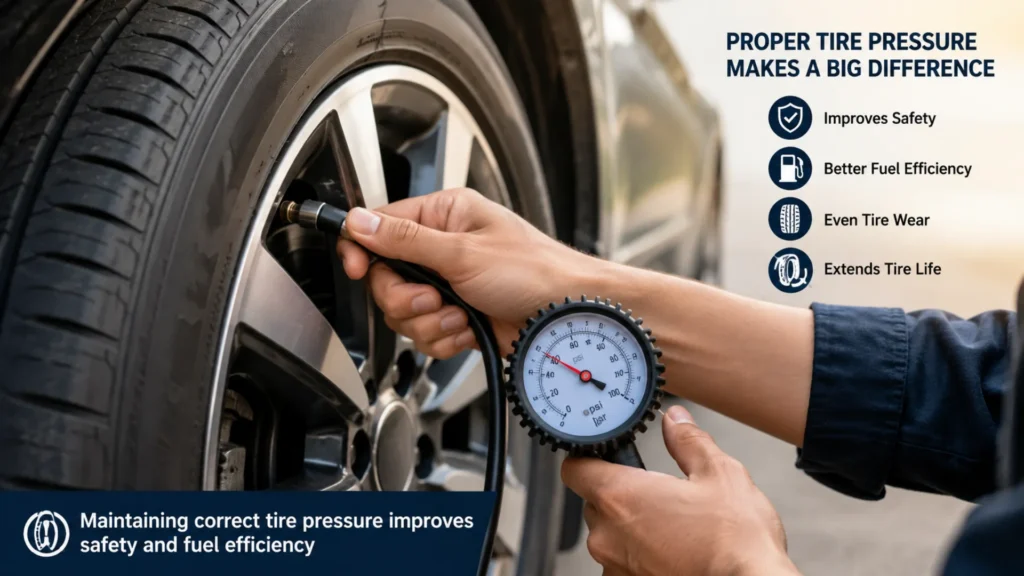
Tire Maintenance Tips to Improve Safety and Fuel Efficiency
Well-kept tires help your fuel economy, grip, and safety, and they’ll last longer as well.
How to Check Tire Pressure
This is one of the easiest checks you can do. Low pressure can hurt fuel efficiency and make the car harder to control. Too much pressure may wear tires faster and reduce grip.
Use a tire pressure gauge at least once a month. You’ll find the recommended PSI in your manual or on the sticker inside the driver’s door. Check when the tires are cold for an accurate reading.
Importance of Tire Rotation
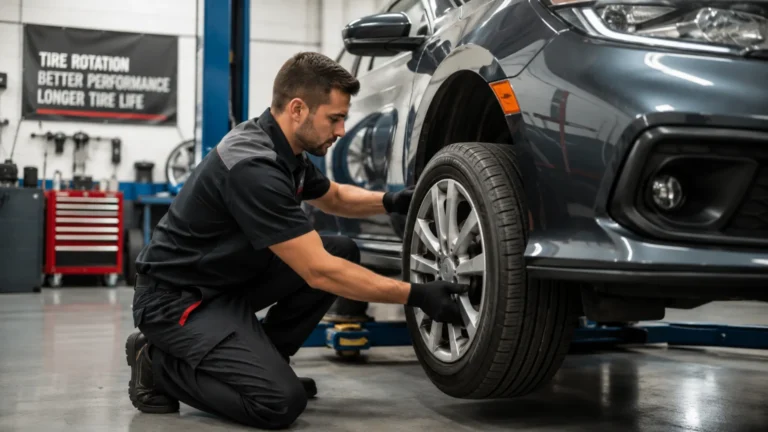
Front and rear tires often wear differently because of braking, steering, and engine weight. Rotating them helps even that out, so they last longer and ride more smoothly.
Most experts recommend doing it every 5,000 to 8,000 miles. It also helps maintain traction.
Signs of Tire Wear
Worn tires can hurt braking and handling, especially on wet roads. Look for:
- Cracks on the tire surface
- Uneven tread wear
- Vibrations while driving
- Reduced grip on the road
You can also try the penny test to check tread depth. If the tread’s too shallow, the tire may not give you enough traction.
When to Replace Tires
Replace them when the tread gets too low or you can see damage. Most last around 3 to 6 years, depending on your driving and the roads.
Frequent air loss, bulges, or poor grip could mean it’s time. New tires can make your car safer, more comfortable, and more fuel-efficient.
Learn more in our guide on how often you should rotate tires.
Car Battery Maintenance Guide
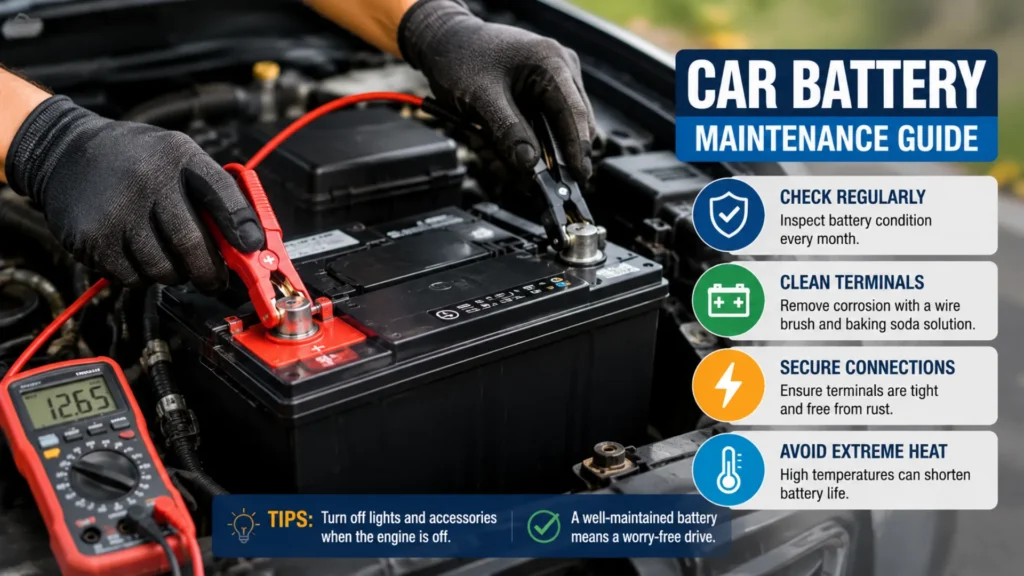
Many drivers don’t think about the battery until the car refuses to start. A few simple checks can save you from that morning, and keep the battery healthy for longer.
Common Signs of a Weak Battery
Don’t ignore these. Maybe the engine cranks slowly, the dashboard lights look dim, or the car struggles to start in the morning. You might also hear clicking when you turn the key, or see warning lights. Your battery may be losing power, and it might need testing or replacing soon.
How to Clean Battery Terminals
Dirty terminals can hurt performance. Turn the car off, and disconnect the battery cables carefully. Use a small brush with a mix of baking soda and water to remove the corrosion. Then wipe everything dry and reconnect the cables tightly.
How Long a Car Battery Lasts
Most last around 3 to 5 years, depending on your driving, the weather, and maintenance. Hot temperatures, short trips, and leaving your lights on can all shorten that.
Tips to Extend Battery Life
- Start the car regularly if it sits unused for long periods
- Avoid leaving headlights or electronics on
- Check battery terminals every few months
- Keep the battery securely mounted
- Get the battery tested during regular servicing
These simple habits can help your battery last longer and make your car more reliable.
Battery died unexpectedly? See our guide on how to jump start a car.
Brake Maintenance: Warning Signs You Should Never Ignore
Your brakes are what let you stay in control and avoid accidents, so this isn’t something to put off. Early problems can lead to expensive repairs and dangerous situations.
Signs of Brake Problems
Watch out for these warning signs:
- Squeaking sounds: High-pitched squealing usually means the pads are worn and need replacing soon.
- Vibrations: If the wheel or pedal shakes while braking, your rotors may be uneven or damaged.
- Soft brake pedal: A pedal that feels soft or sinks too low could mean fluid problems or air in the lines.
Why Brake Maintenance Matters
Good brakes stop your car properly and safely. Maintaining them can improve stopping distance, protect other parts, and reduce the risk of sudden failure. Regular inspections can also catch small problems before they become big ones.
Quick Answer: Why is brake maintenance important?
It improves safety, prevents costly repairs, and helps your car stop smoothly in an emergency.
When to Replace Brake Pads
Most pads need replacing every 30,000 to 70,000 miles, depending on your driving and the roads. Grinding noises, reduced braking power, or a brake warning light could mean it’s time.
Quick Answer: How do you know brake pads need replacing?
Listen for squeaking or grinding, and watch out for vibrations or weaker braking.
Important Fluids Every Car Owner Should Check
This is an easy way to avoid expensive repairs. Fluids help parts of your car stay cool, move properly, and work safely. A quick look every few weeks can help you spot problems early.
Coolant
It controls engine temperature and prevents overheating. If it gets too low, the engine can get extremely hot and suffer serious damage. Check the reservoir when the engine’s cool. The level should be between the minimum and maximum marks.
Brake Fluid
This one’s vital for safe braking. Low or dirty fluid can make the pedal feel soft or less responsive. Check the reservoir regularly, and if the fluid looks dark or dirty, it may need replacing.
Transmission Fluid
It lubricates the transmission and helps gears shift smoothly. Low fluid can cause rough shifting or strange noises. You can check it with a dipstick on some cars, while others may need a mechanic.
Power Steering Fluid
It makes steering easier. If it’s low, you may hear whining or feel stiff steering. Keep it at the recommended level.
Windshield Washer Fluid
It keeps your windshield clean so you can see. Dirt, bugs, and dust can quickly block your view, especially on long trips or in the rain.
| Fluid Type | Purpose | Check Frequency |
|---|---|---|
| Coolant | Prevents engine overheating | Monthly |
| Brake Fluid | Supports safe braking | Monthly |
| Transmission Fluid | Helps smooth gear shifting | Every 1–2 months |
| Power Steering Fluid | Makes steering easier | Monthly |
| Windshield Washer Fluid | Cleans windshield | Weekly |
Air Filter and AC Maintenance Tips
Why Air Filters Matter
Your car has two: the engine air filter and the cabin air filter. The engine filter stops dust, dirt, and debris from getting into the engine. Keep it clean, and the engine gets the airflow it needs, which can help fuel efficiency and performance.
The cabin filter cleans the air coming through your AC vents, removing dust, pollen, and bad smells. If you often drive in traffic or dusty areas, these filters can get dirty faster.
Signs of a Dirty Air Filter
Your air filter may need replacing if you notice:
- Weak airflow from AC vents
- Bad smell inside the car
- Reduced fuel efficiency
- Engine feels less responsive
- Unusual engine sounds
A dirty filter can make the AC work harder, and you’ll be less comfortable too.
AC Maintenance Tips
Regular AC servicing helps keep the system working well, especially in hot weather. Try these tips:
- Replace the cabin air filter regularly
- Clean AC vents and dashboard area
- Run the AC for a few minutes weekly, even in winter
- Check refrigerant levels during servicing
- Get professional AC inspection once a year
A little care can help your AC cool better and spare you expensive repairs.
Common Car Maintenance Mistakes That Can Damage Your Vehicle
Lots of drivers make these mistakes without realizing how much damage they can do. Something you ignore today can be a costly repair later.
Ignoring Warning Lights
They’re there for a reason. Ignore the check engine light, oil warning, or battery alert, and things could get much worse. A minor sensor problem could even lead to engine damage. Look into warning lights early. Don’t wait for a breakdown.
Delaying Oil Changes
Old or dirty oil can’t protect the engine properly. Put off changing it, and you could face poor performance, overheating, and even serious engine failure. Stick to the recommended schedule.
Driving With Low Tire Pressure
It affects handling, braking, and fuel economy, and it wears tires unevenly. Underinflated tires can even cause dangerous blowouts. Checking the pressure takes a minute, and it’s well worth doing.
Skipping Regular Service
Routine service can catch small problems before they get expensive. Mechanics can inspect your brakes, fluids, belts, filters, and more. Skipping it may save you money for a little while, but it often costs more later.
Small mistakes can get expensive, so stick with it.
DIY Car Maintenance Tips You Can Do at Home
You don’t have to be a mechanic to handle the small stuff. A few simple jobs can help your car run smoothly, make it safer, and even save you money. Most only take a few minutes.
Simple Beginner-Friendly Tasks
Start by checking your fluids. Open the hood and look at your engine oil, coolant, brake fluid, and washer fluid. If they’re low, you could end up with poor performance or damage.
Replacing windshield wipers is another easy one. If they streak or make noise in the rain, get a new set. You can replace most blades in minutes, without any special tools.
See white or blue buildup around your battery? Clean the terminals, since dirty ones can cause starting problems. Use a brush and battery cleaner, and work carefully.
Tools Every Car Owner Should Have
A few basic tools make things a lot easier:
- Tire pressure gauge for checking tire air pressure
- Jumper cables for emergency battery problems
- Flashlight for nighttime inspections or emergencies
These simple steps can help keep your car reliable and cut down on surprise breakdowns.
Seasonal Car Maintenance Tips
Weather can affect your tires, battery, brakes, and engine, so it makes sense to adjust your routine through the year.
Summer Car Care Tips
Hot weather stresses your engine and cooling system. Check the coolant level and make sure the radiator’s working properly to prevent overheating. Keep an eye on your tires too, because heat can raise tire pressure and speed up wear. Test the AC before long drives, top up your washer fluid, and park in the shade when you can.
Monsoon Maintenance Tips
Wet, slippery roads call for some extra care. Check your wipers and replace them if they streak. Make sure your headlights, brake lights, and fog lights are working. Look at your tire tread, since worn tires grip poorly on wet roads. Check your brakes as well, and avoid driving through deep water, which can damage the engine or electrics.
Winter Car Maintenance Tips
Cold can weaken your battery, so give it a check. Make sure your tires have the right pressure and enough tread for grip. On cold mornings, let the engine warm up slightly before you drive. Keeping the fuel tank at least half full can also help reduce moisture buildup.
Car Maintenance Schedule by Mileage
A simple schedule can keep your car reliable, safe, and fuel-efficient for years. Basic care doesn’t have to be complicated, and it’s far better than waiting for something big to go wrong.
Here’s an easy one to follow:
| Mileage | Recommended Maintenance |
|---|---|
| 5,000 km | Oil check |
| 10,000 km | Tire rotation |
| 20,000 km | Air filter replacement |
| 40,000 km | Brake inspection |
At about 5,000 km, check your engine oil. At 10,000 km, rotate your tires so they wear evenly.
At 20,000 km, replacing the air filter can improve airflow and help fuel efficiency. By 40,000 km, it’s important to have your brakes inspected.
Keep track of these, and you could save money over time.
How Much Does Car Maintenance Cost?
It depends on your car, how much you drive, and what it needs. Basic service is usually affordable if you catch problems early. Ignoring things is what gets expensive.
Basic Maintenance Costs
Common maintenance expenses include:
- Oil change
- Tire rotation
- Brake inspection
- Air filter replacement
- Battery check
Oil changes and tire checks are usually low-cost, while brake replacement or suspension work can cost more. Luxury cars and older vehicles may also need more spending.
DIY vs Professional Service
You can do some jobs at home, like checking tire pressure, replacing wiper blades, or changing air filters. That saves you the cost of labor.
Leave complex jobs like engine diagnostics, brake repairs, or transmission work to a professional. Certified mechanics have the tools and experience to do them safely.
How Regular Maintenance Saves Money
It might feel like an extra expense, but it helps prevent costly breakdowns. Oil changes, tire care, and inspections can also improve fuel efficiency and help your car last longer.
A small cost today can spare you a large bill later.
Frequently Asked Questions About Car Maintenance
How often should a car be serviced?
Most cars need servicing every 5,000 to 10,000 kilometers or every 6 to 12 months. It depends on your car, your driving, and the manufacturer’s recommendations.
What maintenance should be done regularly?
Check your engine oil, tire pressure, brakes, battery, filters, and fluid levels.
Can I do car maintenance myself?
Yes. Beginners can check oil and tire pressure, clean the car, and replace wiper blades. Leave complex repairs to a mechanic.
What happens if you skip maintenance?
You could end up with engine problems, poor fuel efficiency, brake issues, and expensive repairs.
Which maintenance is most important?
Regular oil changes are among the most important, since they help protect the engine from damage.
How do beginners maintain a car?
Follow the service schedule, check fluids regularly, keep tires properly inflated, and pay attention to warning lights and unusual sounds.
Final Thoughts on Car Maintenance
Car maintenance doesn’t have to be difficult. Check your oil, watch your tire pressure, replace worn parts, and follow your service schedule. Those simple habits can make your car safer and reduce the risk of sudden breakdowns.
They can save you money too. Start with this checklist today, even if it’s just the weekly checks. Your car, and your wallet, will be better off.